

Have you recently discovered a hollow trunk on one of the trees in your yard? Discovering that the center of the tree has all but disappeared can be a surprise, especially because in many cases, it may appear perfectly healthy from the outside.
A hollow tree trunk doesn’t necessarily mean that the tree is dying. In fact, it can continue to stand strong for years. A professional tree service company in Kerrville, TX, can help you identify how tree decay creates hollow trunks and what to do next to protect your property.
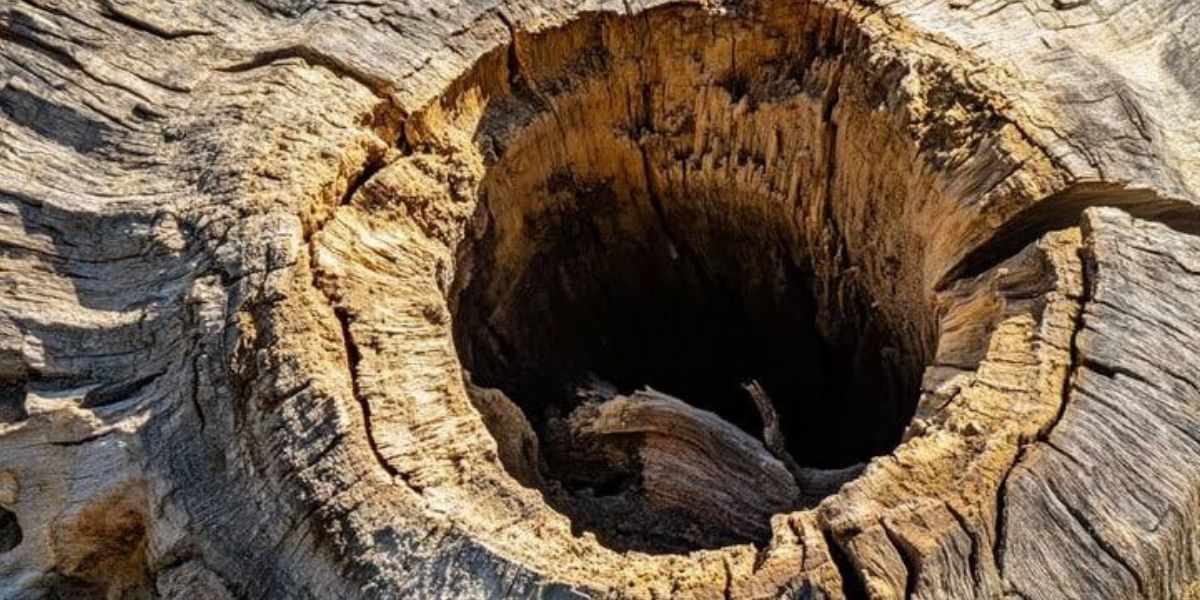
Why the Center of the Trunk Decays First
Most hollow tree trunks develop gradually as the interior wood decays while the outer layers remain alive and functional.
The outer ring, called sapwood, is where water and nutrients travel through the trunk, while the heartwood is essentially dead wood that provides structural support. This is one of the primary factors that lead to trunk decay in trees: Since the heartwood no longer has active defenses, it’s the first to succumb when decay-causing organisms get inside.
Why Do Tree Trunks Become Hollow Over Time?
Decay that starts after an injury is the most common cause of hollow tree trunks. For example, broken limbs from storm damage create openings in the bark that allow fungi and other organisms to enter the wood and begin breaking it down. Damage from lawn equipment and improper trimming and pruning cuts is another frequent culprit.
When wounds remain open longer than usual, they collect moisture that leads to rot and attracts fungal organisms. Insects, particularly wood-boring beetles and carpenter ants, often follow. They tunnel through already-softened wood, which accelerates decay and hollowing.
Over time, the wood inside the trunk may disappear altogether, even as the tree continues to produce leaves and grow new branches. Trees naturally compartmentalize decay, walling off damaged tissue to limit the spread. That defense mechanism buys time, but it can’t reverse damage that has already taken hold.
Is a Hollow Tree Always Dangerous?
A hollow tree trunk doesn’t automatically mean a tree is dead or unsafe, but it does warrant attention. Although a tree can continue living for years with a hollow center, it can be structurally weak. The more wood that’s been lost to decay, the less the tree can withstand significant wind loads or the weight of wet foliage after a rain.
Most arborists suggest removing a tree when more than a third of the trunk’s circumference has been hollowed out. Removal may be necessary if the tree is located close to structures or sidewalks, as it could fall unexpectedly. Cavities or mushrooms growing on the trunk also warrant acting sooner rather than later.
When To Call Texas Tree Authority for Help
A hollow tree trunk is not always a death sentence for a tree, but it’s always worth taking seriously. Get in touch with the experts at Texas Tree Authority in Kerrville instead to learn the reasons to avoid DIY tree removal and get a safer solution. Call (210) 251-4232 to schedule a consultation and find out exactly where your trees stand.


